

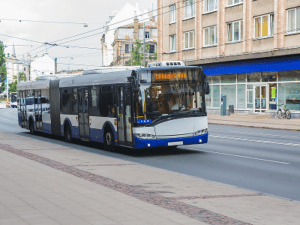
New York City transit buses carry millions of passengers every year. When one of these large vehicles is involved in a crash, the consequences can be devastating. The size of a transit bus, the number of passengers onboard, and the absence of seat belts on most buses can turn a crash into a catastrophic event within seconds.
In the immediate aftermath, news reports often focus on the scale of the incident while leaving one critical question unanswered: who is legally responsible?
Determining liability after a public transit accident is rarely straightforward. Unlike many car accidents, where only a few parties may be involved, bus crashes often involve multiple entities, public transit systems, regulatory oversight, and complex insurance structures. Understanding third-party negligence and how liability may extend across multiple parties is central to any severe injury claim.
Types of Bus Accidents in New York
Bus accidents take many forms, and the type of crash can influence how liability is investigated and who may ultimately be held responsible:
- Collisions with other vehicles or stationary objects
- Passenger injuries caused by sudden stops, sharp turns, or abrupt acceleration, even without a collision
- Pedestrian and cyclist accidents
- Rollovers, which are less common but can cause catastrophic harm to everyone onboard
Why Bus Accidents Often Cause Catastrophic Injuries
Transit buses are significantly larger and heavier than passenger vehicles. When a crash occurs, that size difference amplifies the forces involved. Most transit buses do not provide seat belts, leaving riders vulnerable during sudden stops or collisions. Passengers may be thrown against seats, poles, or windows during a rollover or abrupt stop. A single bus collision can injure dozens of people at once.
These crashes frequently result in severe bus accident injuries, including traumatic brain injuries, spinal cord injuries, fractures, internal injuries, and permanent disability. Victims often face extensive medical treatment, lost wages, and lasting emotional and psychological harm.
Determining Liability After a Bus Crash in New York
Establishing liability after a public transit crash requires a detailed investigation. Evidence may include police reports, traffic camera footage, driver records, mechanical inspections, and electronic data from the vehicle. In many cases, responsibility falls on more than one party. Third-party negligence can extend liability well beyond the driver behind the wheel.
The Bus Company or Transit Operator
Public transit agencies may be held responsible when safety rule violations contribute to a crash. This can include failing to inspect or maintain vehicles, ignoring known mechanical problems, employing inadequately trained drivers, or disregarding transportation safety regulations. Investigators may review operational records, maintenance logs, and black box data to determine how the crash occurred.
The Bus Driver
A driver’s conduct can also contribute to liability. Negligent actions may include speeding, distracted driving, fatigue, or improper turns and lane changes. Under New York’s comparative negligence rules, responsibility for a crash may be shared among multiple parties.
Manufacturers or Maintenance Providers
Defective equipment and improper repairs can also cause or contribute to a catastrophic crash. When a mechanical failure traces back to a faulty component or negligent maintenance, the manufacturer or repair provider may share liability. In cases involving interstate buses or commercial carriers, investigators may also review regulatory standards established by the Federal Motor Carrier Safety Administration.
Municipalities or Property Owners
Roadway hazards can also contribute to a bus crash. Dangerous road design, poor maintenance, or missing traffic control devices may expose municipalities or property owners to liability. Claims involving government entities follow strict procedures and often involve a shortened statute of limitations, making early investigation critical.
Deadlines for Filing a Bus Accident Claim in New York
Filing deadlines in bus accident cases are strict, and missing them can eliminate the right to recover compensation entirely.
In most New York personal injury cases, victims have three years from the date of the accident to file a lawsuit. However, when the accident involves a city- or state-operated bus, a much shorter deadline applies. Under New York General Municipal Law, a notice of claim must be filed within 90 days of the accident before a lawsuit can proceed.
That 90-day window passes quickly, particularly when the focus is on medical recovery. Speaking with an attorney as early as possible protects these rights and preserves critical evidence before it disappears.
Insurance Issues After a Bus Accident
Insurance coverage following a bus crash can be complicated. In New York, injured passengers may initially access No-Fault insurance, which provides personal injury protection (PIP) benefits for certain medical expenses and economic losses regardless of fault.
However, the injuries sustained in a catastrophic bus crash often exceed the limits of basic No-Fault coverage. In those cases, victims may pursue additional claims against negligent parties for the following damages:
- Medical expenses
- Lost wages and reduced earning capacity
- Pain and suffering
- Long-term rehabilitation costs
- Emotional distress and psychological harm
Legal Rights for Victims and Families
When a bus crash causes catastrophic harm, injured individuals may pursue a personal injury claim to recover damages. In fatal cases, surviving family members may pursue wrongful death claims.
Because bus crashes frequently involve multiple victims and multiple responsible parties, compensation often depends on identifying every potential source of liability and securing evidence early.
Key evidence in bus accident cases often includes:
- Police reports
- Accident reconstruction analysis
- Driver logs and safety records
- Vehicle inspection reports
- Black box data from the bus
- Traffic camera footage
- Witness statements
The strength of this evidence often plays a critical role in the results achieved in complex transit accident litigation.
Seeking Accountability After a Catastrophic Bus Crash
A public transit crash can change lives in an instant. Victims may face extensive medical treatment, financial uncertainty, and unanswered questions about how the accident occurred. When negligence causes a life-altering injury, those responsible must be held accountable.
The trial attorneys at Morelli Law Firm represent individuals and families harmed in transportation accidents throughout New York. Our team investigates complex cases, identifies every responsible party, and fights to secure the compensation our clients deserve.
If you or a loved one suffered injuries in a bus crash, contact Morelli Law Firm today for a free and confidential case evaluation.