

Federal safety standards are well established, yet the Occupational Safety and Health Administration (OSHA) continues to cite New York construction sites for repeat violations that put workers at risk. Preventable falls, equipment hazards, and unsafe site conditions continue to drive serious injuries and fatalities on NYC construction projects.
Violations from OSHA point to recurring accident patterns and gaps in safety oversight. These unsafe conditions persist across the construction industry despite extensive regulation.
Fall Protection Violations
Failure to provide adequate fall protection is the most frequently cited OSHA violation. Falls from heights remain a leading cause of serious jobsite injury on construction sites.
These violations typically involve missing or inadequate protections such as guardrails, safety nets, or personal fall arrest equipment. Open edges, floor openings, and roof perimeters may be left unsecured. Safety equipment may be present but improperly installed, poorly maintained, or used without adequate training.
Fall protection lapses often occur during transitional phases of work, when temporary site conditions change faster than safety measures are updated. When falls occur, the resulting injuries are frequently catastrophic, including traumatic brain injury, spinal damage, internal organ trauma, or death.
Ladder and Scaffolding Violations
Ladder and scaffolding violations often arise from unsafe access conditions on active job sites. These issues are common on multi-story projects and renovation work, where temporary access systems are installed, moved, and reused throughout the workday.
Ladder violations typically involve damaged equipment, improper placement, or use beyond design limits. Workers may be required to carry tools or materials while climbing, stand on ladders as work platforms, or rely on unsecured ladders to reach elevated areas. In many cases, proper training on ladder selection, positioning, and load limits is lacking.
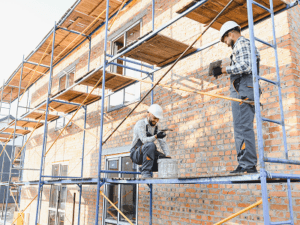
Scaffolding violations frequently include missing guardrails, incomplete platforms, unstable foundations, or improper assembly. When scaffolds are not built, secured, or inspected according to safety requirements, collapses and sudden shifts become more likely.
These violations can result in serious injuries caused by failing structures, particularly when multiple workers are positioned on the same scaffold.
Hazard Communication and Training Failures
Construction sites routinely expose workers to hazardous materials, chemicals, and substances that require clear communication and training. OSHA hazard communication standards require proper labeling, access to safety data sheets, and instruction on safe handling procedures.
Violations in this category often include missing labels, inaccessible safety data sheets, or inadequate training on chemical hazards. On construction sites, these failures commonly involve solvents, fuels, adhesives, welding fumes, and dust generated during cutting or demolition activities.
Workers can be exposed to hazardous substances without proper respiratory protection or instruction on exposure limits. The absence of personal protective equipment and clear safety protocols increases the risk of respiratory injury, chemical burns, and long-term health conditions. These injuries may not be immediately visible, but can have lasting consequences for workers’ health and earning capacity.
Powered Industrial Trucks and Heavy Equipment Violations
Many construction projects rely on powered industrial trucks, forklifts, and other heavy machinery to move materials and equipment. OSHA citations in this area often stem from inadequate operator training, failure to conduct routine inspections, or unsafe operation in congested work areas.
Violations involving heavy machinery create a high risk of struck injuries, crushing incidents, and severe trauma, particularly when equipment is operated near workers on foot. Limited visibility, lack of signaling procedures, and poor coordination between operators and ground crews further increase the danger.
In New York’s dense urban construction environment, these risks are amplified. Confined spaces, overlapping trades, and constant material movement increase the likelihood of serious injury when equipment safety rules are ignored.
Electrical and Machine Guarding Violations
Electrical hazards and unguarded machinery remain a significant source of construction injuries. Common violations include exposed live wiring, improper use of extension cords, failure to implement lockout and tagout procedures, and missing guards on active equipment.
These incidents can result in burns, shock, or fatal electrocution. Machinery operating without proper guarding increases the risk of amputations, lacerations, and crushing injuries. These accidents often occur when equipment is modified in the field, used outside its intended purpose, or operated without adequate safeguards in place.
OSHA citations in this category reveal a breakdown in supervision and inspection practices.
How OSHA Violations Relate to Construction Injuries
The most frequently cited OSHA violations align closely with the causes of serious construction injuries. Falls, unsafe scaffolding, inadequate training, electrical hazards, and uncontrolled equipment reflect the same risks OSHA identifies as the Fatal Four: falls, contact with objects, electrocution, and caught-in incidents.
Across New York City, these hazards continue to result in preventable injuries despite extensive regulation. OSHA citations often reflect systemic failures in planning, supervision, and enforcement that contribute directly to worker harm.
OSHA Violations and New York Construction Law
OSHA enforces federal safety standards by issuing citations and imposing penalties for serious, repeated, or uncorrected violations. In cases involving willful misconduct or fatal outcomes, federal law also allows for criminal penalties.
These enforcement actions regulate workplace safety but do not, by themselves, establish civil liability. OSHA citations can document unsafe conditions, failures in site oversight, or disregard for required safety practices.
OSHA findings often overlap with duties imposed under New York Labor Law, including obligations related to fall protection, safe work methods, and site control. When the same safety failures appear in both contexts, regulatory enforcement and state labor law claims may point to shared responsibility beyond workers’ compensation.
What OSHA Violations Can Mean After an Injury
When a construction worker is injured under conditions cited by OSHA, those records can be central to evaluating responsibility. They identify the safety measures that were required and document how those measures were not implemented.
Evidence of OSHA violations may support claims involving unsafe work conditions, lack of oversight, or failures by parties responsible for site safety. This information can be especially important when assessing third-party liability beyond workers’ compensation.
Accountability After an OSHA-Related Construction Injury
OSHA violations often point to broader failures in safety planning, supervision, and site control. When those failures lead to injury, they may also indicate responsibility beyond the employer.
A prompt legal review can help preserve evidence, evaluate OSHA findings, and identify parties responsible for unsafe conditions.
An experienced New York construction accident attorney can assess how federal safety violations intersect with state law and explain the legal options available after a serious construction injury.
Contact our attorneys for a free and confidential case evaluation.