

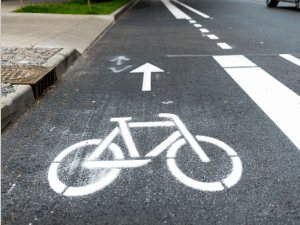
Bike lanes exist to protect cyclists by creating space between them and moving vehicles. However, the effectiveness of that protection depends on the design. When bike lanes are placed too close to parked cars, have poor pavement conditions, or disappear at intersections, the risk of injury increases.
Why Bike Lane Design Matters for Cyclist Safety
Bike lanes are intended to provide a safer space for riders by separating them from vehicle traffic. But not all bike lanes are created equal. Issues like unclear traffic signals, poorly maintained surfaces, or unprotected bike paths can increase the chance of bicyclist crashes. In fact, some bicycle lanes place riders directly in the “door zone” of parked cars, where a sudden door opening can cause a serious crash.
Protected bike lanes with physical barriers separating them from traffic are among the most effective at enhancing bicyclist safety. These separated bike lanes reduce collision risk, improve traffic flow, and support public health by encouraging active transportation.
Key Risk Factors in Poor Bike Lane Infrastructure Include
- Lack of physical barriers or cycle tracks
- Shared lanes with fast-moving motor vehicles
- Inadequate traffic calming measures, like speed bumps
- Confusing or poorly placed traffic lights and signage
- Dangerous roadway characteristics, such as narrow lanes or sudden merges
Common Design Failures That Lead to Cycling Injuries
Cyclists are vulnerable to a range of hazards when infrastructure fails to account for their safety. Some common design-related causes of cycling injuries include:
- Poorly maintained bicycle facilities with potholes or debris
- Bicycle lanes that disappear at intersections or merge into heavy traffic
- Lack of dedicated space near construction zones or busy transit corridors
- No secure bike parking at public transportation hubs
- Absence of helmet use education or traffic law signage
Even when cyclists follow all traffic laws and wear protective gear, such as a proper helmet design, the urban environment can remain dangerous if cycling infrastructure is poorly planned.
Municipal Liability: What the Courts Say
New York courts recognize the responsibility of municipalities to maintain safe roads for all users. In the case of Turturro v. City of New York, the Court of Appeals held the city accountable for injuries caused by a dangerous road where complaints about speeding and road safety were ignored. The court determined that poor roadway planning can lead to liability.
This case supports a critical point. When city agencies fail to act on known safety issues that endanger cyclists, they may be held responsible.
Legal Options for Injured Cyclists in New York
If you or a loved one got hurt in a bicycle accident because of unsafe infrastructure, you might be able to get compensation through a personal injury claim. Municipalities may be liable for unsafe cycling infrastructure, especially when they ignore known hazards that should be addressed under modern safety standards. The Safe System Approach creates layered protections that help prevent crashes and reduce their impact. This often involves complex legal questions, such as:
- Was there prior knowledge of the dangerous condition?
- Did the design meet current transportation infrastructure safety standards?
- Were any safety regulations, such as those from the Safe System Approach, ignored?
Our team at Morelli Law Firm investigates cycling injuries carefully. We examine dash cam footage, eyewitness reports, and past infrastructure complaints. We help clients recover compensation for medical bills, lost income, and long-term care needs.
How a Lawyer Can Strengthen Your Case
A knowledgeable bike accident attorney can:
- Evaluate whether roadway characteristics contributed to your crash
- Identify all responsible parties, including city agencies or third-party contractors
- Work with transportation engineers to assess the role of bike infrastructure
- Advocate for riders’ rights under New York traffic laws
Whether the accident occurred in a painted lane, shared path, or a protected bike lane design, we can build a strong case grounded in cyclist safety standards and data.
Protect Yourself on the Road
While not every accident is preventable, cyclists can reduce risk by:
- Staying in protected bike lanes when available
- Using helmet cams or dash cams to record traffic incidents
- Locking bikes in secure bike parking areas
- Wearing helmets that meet advanced helmet design standards
- Learning local traffic laws and how they apply to bike riders
Organizations such as municipal safety offices offer tips and programs aimed at increasing rider safety.
Talk to a Bicycle Accident Lawyer Today
If you were injured while biking due to poor lane design, unsafe traffic signals, or other dangerous roadway conditions, you deserve answers. At Morelli Law Firm, we help injured cyclists hold cities, contractors, and others accountable.
Reach out to Morelli Law Firm today for a free consultation. Let us help you understand your rights and take the next steps toward recovery and the justice you deserve.